
Finding the best Banarasi saree takes more than admiring bright colors and detailed patterns. Many shoppers trust seller claims, but real quality depends on silk purity, weave density, and genuine metallic threads.
This Banarasi saree buying guide gives practical steps for judging your next investment. For bridal events, festive celebrations, or formal gatherings, learn to check fabric structure and care needs.
Follow this clear process to feel confident when identifying genuine craftsmanship. You will learn how to choose a Banarasi saree that suits your budget and has timeless elegance, becoming a cherished heirloom for years.
Key Takeaways
- Prioritize fabric quality and silk authenticity over surface-level aesthetics.
- Understand the difference between traditional handloom weaves and machine-made alternatives.
- Evaluate the metallic content of zari to ensure lasting luster and value.
- Match your selection criteria to the specific occasion, whether bridal or formal.
- Always verify purchase terms and care instructions before finalizing your investment.
Step 1: Define the Occasion, Wearer, and Saree Style You Need
Start by considering the event and your comfort needs. Before exploring silk and zari, decide why you need the saree. This step helps your choice suit both your life and the event.
Match the Saree to Weddings, Festivals, Ceremonies, or Formal Events
A Banarasi saree for weddings often needs a rich, heavier drape for the ceremony. Smaller gatherings and festivals may need an easier, lighter drape with regal style.
Consider these factors when matching your garment to the occasion:
- Time of Day: Daytime events often favor lighter colors and subtle metallic work.
- Dress Code: Formal evening galas typically require deeper, richer tones and dense weaving.
- Duration: Think about how long you will be wearing the garment to ensure maximum comfort.
Choose Between a Traditional Bridal Look and a Lightweight Occasion Saree
A bridal Banarasi saree becomes the center of your look. It often has heavy gold or silver zari, dense motifs, and a firm, weighty fabric. Its weight creates a grand shape and helps it suit long hours of detailed rituals.
For a guest event or semi-formal party, a lightweight Banarasi saree is often the better choice. It keeps the cultural richness but uses finer silk and lighter zari patterns. It is effortlessly elegant and lets you move freely without bridal attire’s weight.
Decide Whether You Want a Classic, Contemporary, or Fusion Design
Let your style guide the design you choose. Classic designs honor the craft with Mughal-inspired motifs, such as the buti and jangla patterns. They stay relevant for generations and suit people who value historical authenticity.
Contemporary and fusion designs suit a modern taste. These styles may use unusual color palettes, simple borders, or abstract patterns that blend old weaving with modern fashion. The right design should reflect your personality.
Step 2: Set a Realistic Banarasi Saree Budget
Budgeting for a high-quality textile means balancing your style goals with traditional craftsmanship. Set a clear financial plan before buying an authentic piece of heritage. Learn the market so your investment reflects the artisan’s labor.
Understand How Silk Quality, Zari, Weaving Time, and Craftsmanship Affect Price
The Banarasi saree price depends mainly on weave complexity and material choice. High-grade mulberry silk offers better shine and strength, shaping overall Banarasi silk quality. Artisans may spend weeks or months at one loom, raising production costs.
Real zari uses silver and gold, so it costs more than synthetic choices. Intricate patterns, including Kadhwa or Jamawar, need careful manual work and higher weaver pay. Together, these features honor the time required for handloom production.
Compare Budget-Friendly Options With Investment-Quality Sarees
Beauty does not always require the highest price, but buyers must spot mass-produced and heirloom pieces. Budget-friendly options often use machine-made silk or imitation zari for casual events. Investment-quality sarees use pure materials and hand-woven skill, helping them last for generations.
“True luxury in handloom is not just about the price tag; it is about the story of the hands that wove the fabric and the longevity of the materials chosen.”
| Feature | Budget-Friendly | Investment-Quality |
|---|---|---|
| Silk Base | Blended Silk | Pure Katan Silk |
| Zari Type | Tested/Imitation | Real Silver/Gold |
| Weaving | Powerloom | Handloom |
| Longevity | Short-term | Heirloom |
Reserve Money for Blouse Fabric, Tailoring, Shipping, and Professional Care
The purchase price covers only the start of your total costs. Tailoring the blouse piece may require expert work to match the saree’s detailed borders. International shipping and possible import duties can also raise your total Banarasi saree price.
Also plan for the long-term care of your Banarasi silk quality. Professional dry cleaning protects delicate zari and natural fibers. A small care fund helps your garment stay beautiful for years.
Warning Signs of Prices That Seem Too Good to Be True
Treat a suspiciously low price with great caution. Very cheap listings may use synthetic materials or powerloom methods presented as handloom. Check the seller’s return policy and request detailed, high-resolution photographs before buying.
Step 3: Choose the Right Banarasi Silk Base
Your silk base shapes how the saree drapes, feels, and moves all day. It also controls the garment’s volume and comfort. Learn each weave’s features to match your style and event.
Pure Katan Silk for a Structured, Lustrous, and Formal Look
A pure Katan silk saree is the gold standard for a traditional, regal look. Pure silk threads twist together to create a durable, lustrous fabric. Its dense weave holds pleats and creates a structured silhouette for formal weddings and grand ceremonies.
Organza or Kora Silk for Lightweight Texture and Crisp Draping
For an airy feel, an organza Banarasi saree is an excellent choice. Also called Kora silk, it has a sheer, glass-like finish and crisp texture. Its voluminous drape stands away from the body, making it popular for modern, fashion-forward events.
Georgette and Shattir Silk for Softer Movement and Easier Wear
Georgette and Shattir silk offer a softer choice for comfort and fluid motion. These lighter fabrics drape close to the body and allow effortless movement during long events. A lightweight Banarasi saree in either fabric keeps you comfortable without losing the traditional weave’s intricate beauty.
How Silk Weight, Texture, and Sheen Change the Saree’s Appearance
The Banarasi silk quality you choose changes how light plays across the fabric. Heavier Katan has a deep, rich sheen, while lighter organza gives a subtle, matte glow. Use the table below to choose the base that best suits your needs.
| Silk Type | Drape Style | Best Occasion | Texture |
|---|---|---|---|
| Pure Katan | Structured | Formal Weddings | Smooth & Lustrous |
| Organza/Kora | Crisp/Voluminous | Daytime Events | Sheer & Stiff |
| Georgette | Fluid/Soft | Parties/Socials | Crinkled & Light |
| Shattir | Relaxed | Casual/Semi-Formal | Soft & Matte |
Step 4: Identify the Banarasi Weave That Fits Your Taste
Knowing the terms of Banarasi saree weaving techniques can improve your shopping experience. Learning how artisans build these fabrics helps you value each piece’s artistry. It also helps you compare styles in product descriptions and close-up photographs.
Choose Kadhwa Weaving for Individual Butis and Detailed Craftsmanship
The Kadhwa Banarasi saree is renowned for its labor-intensive process. Artisans hand-weave each motif alone, keeping the fabric’s back clean and free of loose threads. This method creates a highly durable, intricate design with superior quality.
Choose Cutwork for Patterned Designs With a Distinctive Textured Finish
Cutwork removes extra threads between motifs after the weaving process. This creates a distinctive textured finish and adds depth to the pattern. Choose it if you prefer a saree with a tactile, dimensional quality.
Choose Tanchoi for Dense Multicolored Motifs and Rich Surface Detail
For a sophisticated look, consider the Tanchoi style. It uses a dense arrangement of multicolored motifs to create a rich, satin-like surface. The pattern is woven into the fabric, creating a smooth, elegant look for formal evening wear.
Choose Jamawar for Elaborate All-Over Patterns and a Regal Appearance
Jamawar weaving represents luxury and a regal appearance. These sarees have elaborate, all-over patterns inspired by traditional paisley or floral designs. The sheer density of the work makes these pieces ideal for weddings and grand celebrations.
Recognize Butidar, jangla, and Tissue Styles Before You Buy
Beyond the main techniques, learn these common style classifications:
- Butidar: Features small, repeating motifs scattered across the body of the saree.
- Jangla: Characterized by dense, flowing floral or vine patterns that cover the entire fabric.
- Tissue: Uses fine metallic threads in the warp and weft to create a shimmering, translucent effect.
Learning these categories helps you communicate with artisans and retailers. Identifying these specific Banarasi saree weaving techniques helps ensure your choice matches your personal aesthetic and the requirements of your event.
Step 5: Evaluate the Zari Before You Purchase
Checking zari quality helps ensure your investment lasts for generations. The metallic thread gives your garment its character, weight, and lasting value. Learn about these threads so you can choose a piece that meets your needs.
Compare Real Silver-and-Gold Zari With Tested Zari and Imitation Zari
Authentic Banarasi zari traditionally uses fine silver wire coated with gold. This “real” variety has a soft luster that ages gracefully. “Tested” zari uses copper or other base metals coated with gold, offering a similar look at a lower price.
Imitation zari, also called plastic or polyester-based metallic thread, costs the least. It may look bright at first, but it lacks the depth and elegance of a real zari saree. Ask your retailer about its composition before paying for its quality.
Inspect the Zari’s Shine, Smoothness, Density, and Reverse-Side Finish
Do not judge a saree only by the front of its border. Run your fingers over the metallic patterns to check for smoothness; quality thread feels soft, not scratchy. A dense, even weave shows better craft than loose or uneven metallic work.
Turn the fabric over to inspect its reverse side. A well-made piece has a clean finish without many loose threads or messy knots. This care shows authentic handloom production.
Choose Gold, Silver, or Multicolor Zari for Different Wardrobes
Your metallic thread should suit your jewelry and personal style. Gold zari gives a warm, regal aesthetic and pairs well with traditional gold sets. Silver zari offers a cooler, modern look that suits diamond or platinum accessories.
Multicolor zari adds bright accents and suits many festive occasions. Choose a metal tone that highlights your skin undertone and suits your planned events.
Ask About Zari Composition, Tarnishing, and Long-Term Maintenance
Real metallic threads can tarnish naturally when exposed to air and humidity. Ask about the alloy, since higher silver content may need more careful storage. Wrapping the fabric in muslin helps protect the original shine of your Banarasi zari for years.
Why a Heavy Zari Border Does Not Always Mean Better Quality
Many buyers think a wider or heavier border means better quality. However, it may hide poor fabric or rushed weaving. Focus on the design’s balance and durability, not just the amount of metallic thread. A balanced real zari saree drapes well and offers comfort and style throughout your event.
Step 6: Select Colors and Motifs That Suit Your Look
Choosing colors and motifs helps your purchase match your personal style. When you assess Banarasi saree colors, you set the mood for your whole outfit. These choices can boost your look at any gathering.
Choose Deep Jewel Tones for Bridal and Evening Occasions
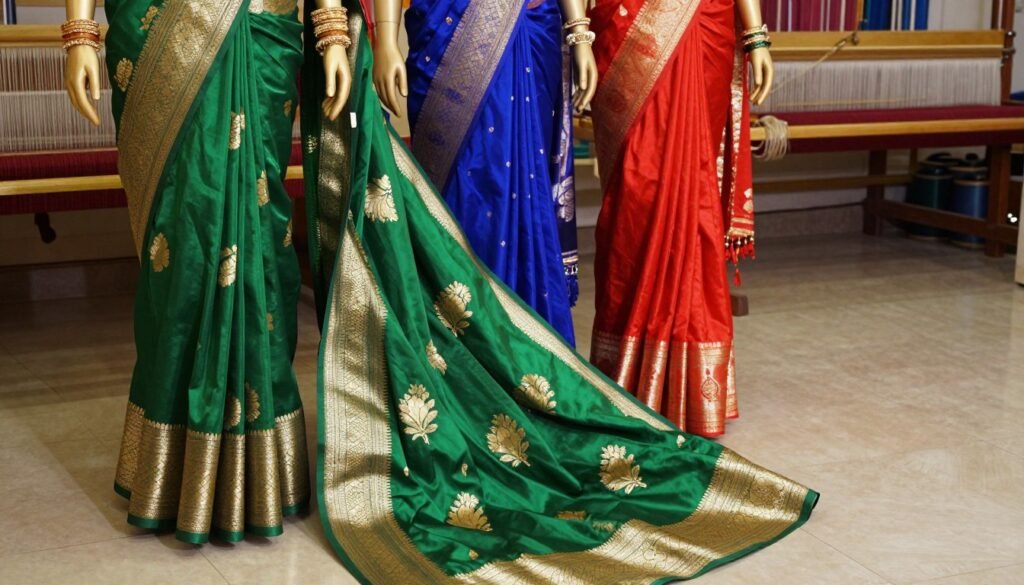
Deep jewel tones bring regal sophistication to grand celebrations and evening events. Emerald green, royal blue, deep maroon, and plum stand out against gold or silver zari. These shades draw attention and create a timeless, luxurious look for weddings.
Use Pastels, Neutrals, and Soft Metallics for Daytime Events
Daytime events often need a light, airy look. Try mint, powder blue, or blush pink for a fresh, elegant style. Neutrals and soft metallics shine in sunlight without looking too heavy.
Match Floral, paisley, geometric, or Mughal-Inspired Motifs to Your Style
The patterns in your fabric show tradition and create visual movement. Choosing the right Banarasi saree motifs defines your personal silhouette. Consider these common design influences:
- Floral: Offers a feminine and classic appeal, often representing growth and beauty.
- Paisley (Buta): A traditional teardrop shape that adds a sense of heritage and intricate detail.
- Geometric: Provides a modern, structured look that works well for contemporary settings.
- Mughal-Inspired: Features elaborate, symmetrical designs that evoke a sense of historical grandeur.
Consider Skin Undertone, Jewelry, Makeup, and Existing Accessories
Your choices should complement your natural features, not compete with them. Warm undertones often suit gold-based zari and earthy tones, while cool undertones suit silver zari and jewel tones. Match your jewelry and makeup, too, and choose metal finishes that blend with the saree’s zari work.
Check the Saree in Natural Light Before Confirming the Color
Indoor lighting can hide the silk’s true depth and the shine of metallic threads. Before deciding, view the fabric in natural daylight to see its true colors. This step prevents surprises and helps the Banarasi saree colors look as expected at your event.
Step 7: Check the Saree’s Construction and Authenticity
When you buy a luxury textile, checking its construction is a key step. A handloom Banarasi saree shows human skill, and its structure can reveal true quality.
Inspect the Selvedge, Borders, Pallu, and Motif Alignment
Begin by checking the selvedge, the finished edge of the fabric. On authentic pieces, it should look clean, even, and free from fraying.
Check motif alignment across the body and pallu. Hand-woven patterns may vary slightly, but their overall balance should look intentional. Precision in the border work shows a skilled weaver spent hours perfecting the design.
Look for Handloom Characteristics Without Treating Minor Irregularities as Defects
Remember that a handloom Banarasi saree is not machine-made. Tiny knots and slight weave changes show the human touch, not factory flaws.
These small changes show that traditional looms made the fabric. Do not mistake them for defects, because they add character and value.
Review the Weave, Silk, Zari, and Handloom Certification Details
Always check the documents provided with your item. A genuine piece often includes a government-issued handloom mark or a certificate from the weaver’s cooperative.
Check the silk type and zari composition. Quality pieces state whether the zari uses real silver or gold, which affects long-term fabric care.
Ask the Seller for Close-Up Photos, Fabric Information, and Origin Details
Before buying, ask for clear, close-up photos of the weave and fabric’s reverse side. The back of each motif can show thread density and quality.
Ask about the piece’s origin and materials. A reputable seller will share these details, helping confirm your Banarasi saree authenticity beyond doubt.
Separate Authenticity Claims From Vague Marketing Language
Be careful with sellers who use terms like “silk-like” or “premium finish” without listing materials. Authentic sellers provide clear details about silk grade and weaving methods.
A description without technical details may signal a fake hand-woven product. Use the table below to compare key features and choose wisely.
| Feature | Handloom Banarasi | Powerloom Imitation |
|---|---|---|
| Weave Texture | Slightly irregular, organic | Perfectly uniform, flat |
| Reverse Side | Visible floats and knots | Clean, machine-cut finish |
| Zari Feel | Soft, flexible, premium | Stiff, plastic-like, shiny |
| Certification | Handloom Mark provided | Usually absent or generic |
Step 8: Confirm the Fit, Length, and Draping Practicality
Your comfort and elegance begin with checking the exact Banarasi saree measurements for your chosen piece. These garments are usually free-sized, but their dimensions affect how the fabric rests on your body. Checking first can prevent trouble while draping.
Measure the Saree Length, Width, and Available Blouse Piece
A standard saree length ranges from 5.5 to 6 meters and suits most people. Check whether the blouse piece comes attached or separately. If you are taller than average, choose enough width for secure tucking without harming the drape.
Choose Border Width and Pallu Scale for Your Height and Frame
Your border should suit your body frame. On a petite frame, narrower borders can create a balanced, longer look. Taller people can wear dramatic, wide borders for a grander look.
Check Whether the Fabric Supports Your Preferred Draping Style
Silk textures behave differently when you pleat them. Crisp Kora silk holds its shape, while softer Georgette or Katan silk may need more pins. Think about the fabric’s weight before buying, so you can move with confidence.
Plan Blouse Necklines, Sleeves, Padding, and Tailoring Allowances
Consider the fabric’s weight and embroidery when planning your blouse. Professional tailoring helps create a structured fit, especially with padded cups or detailed necklines. Leave extra seam allowance for future changes, because quality silk deserves a lasting fit.
Prevent Common Problems With Slippery Silk and Heavy Borders
Slippery silk can be hard to manage, so use high-quality safety pins on your pleats. With a heavy border, use a sturdy petticoat to support the added weight. Good pinning keeps your drape secure throughout the event.
| Feature | Petite Frame | Tall Frame |
|---|---|---|
| Border Width | Narrow to Medium | Wide and Bold |
| Pallu Style | Minimalist | Elaborate |
| Fabric Choice | Lightweight | Structured |
| Blouse Fit | Tailored/Sleek | Structured/Detailed |
Reviewing these Banarasi saree measurements and planning tailoring early can create a seamless experience. A well-fitted garment looks better and lets you enjoy your special event with peace of mind.
Step 9: Compare Sellers and Inspect the Purchase Terms
Choosing a reliable partner is the final step toward securing genuine heritage craftsmanship. For a bridal heirloom or festive ensemble, Banarasi saree sellers shape your experience and product quality.
Evaluate Specialist Weavers, Boutiques, Department Stores, and Online Retailers
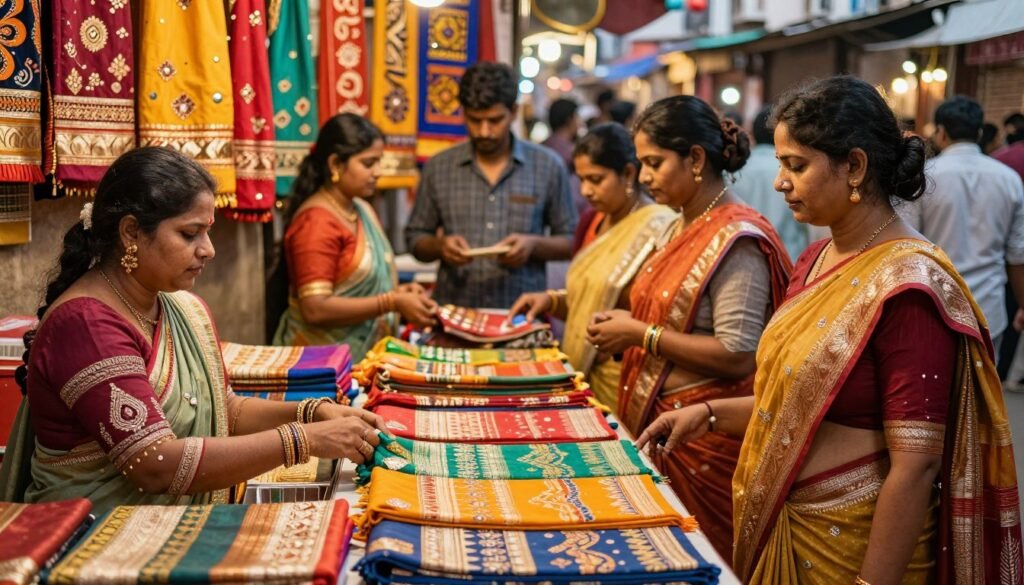
Specialist weavers who sell directly often share the most authentic details about looms and material origins. Boutiques offer selected collections and styling advice, while department stores offer convenience and trusted brands.
When you buy Banarasi saree online, choose platforms that allow direct artisan communication. This openness helps you learn the silk’s source and the zari work’s detail before paying.
Compare Product Photos, Measurements, Reviews, and Material Descriptions
Study high-resolution photos to check the fabric’s weave density and shine. Trusted vendors list exact measurements, including blouse-piece length and border width, to prevent sizing problems.
Customer reviews help you compare each product with its description. Seek comments about silk weight and color accuracy in natural light.
Verify Return Policies for Color Variation, Damage, and Custom Blouses
Return policies matter for handloom goods because small irregularities often occur. Confirm whether sellers accept color-variation returns, since screens can change rich jewel tones.
Custom-tailored blouses are usually non-refundable. Also ask about transit damage coverage if your package arrives harmed.
Confirm Shipping Insurance, Delivery Timing, and Duties for U.S. Buyers
International shipping needs planning to avoid surprise costs. Choose a merchant with shipping insurance covering your purchase’s full value during U.S. transit.
Ask whether the seller handles customs forms to reduce border delays. Check whether the price includes import duties or you must pay them upon arrival.
| Seller Type | Transparency | Expertise | Buyer Protection |
|---|---|---|---|
| Specialist Weaver | High | Excellent | Moderate |
| Luxury Boutique | High | High | High |
| Department Store | Moderate | General | Very High |
| Online Marketplace | Variable | Low | Variable |
Step 10: Use a Final Banarasi Saree Buying Checklist
A clear review helps ensure your purchase meets high craft standards. Before paying, use a Banarasi saree checklist to check each detail. This final step protects your luxury textile investment.
Confirm the Silk Type, Weave, Zari, Color, Motif, and Occasion
First, compare the garment’s main details with the seller’s description. Check the silk base: Katan, Organza, or Georgette. Make sure the weave style, such as Kadhwa or Tanchoi, matches your choice.
- Check that the zari composition matches the promised quality.
- Verify that the color and motif are appropriate for your intended occasion.
- Ensure the overall Banarasi saree quality meets your personal standards for luxury.
Inspect Seams, Loose Threads, Stains, Pulls, and Border Consistency
Inspecting the fabric helps protect its long-term use. Check the full length for flaws from production. Make sure the borders are straight and firmly joined to the main body.
Look for loose threads or snags that may show poor handling. Tell the seller about stains or pulls before you complete the sale. A quality piece should feel even and well made throughout.
Compare the Saree Against Your Budget and Wardrobe Plans
A beautiful design may not suit your daily life. Review your budget and how this piece fits your wardrobe. Ask whether its weight and drape suit your planned events.
This check can prevent impulse buys that stay unused in your closet. When the piece has a clear purpose, your Banarasi saree quality investment offers lasting value.
Record Seller Promises, Certification Details, and Care Instructions
Keep purchase records to protect your saree over time. Write down seller promises about returns or authenticity. Store your handloom certification and any provided care instructions safely.
This information helps you keep the fabric’s luster for years. Proper record-keeping is the final step toward becoming a confident collector of fine Indian textiles.
Step 11: Store and Care for Your Banarasi Saree Correctly
Your Banarasi saree is a work of art that needs careful handling to preserve its intricate beauty. Proper Banarasi saree care ensures that delicate silk fibers and metallic threads stay vibrant for generations. A disciplined routine protects your investment from environmental damage and physical wear.
Air the Saree Before Folding It With the Zari Turned Inward
After wearing your saree, never fold it at once. Let it air out in a cool, shaded area for several hours to remove moisture and body oils. Once dry, fold the fabric with the zari side inward to prevent snags and protect the metallic finish from air.
Wrap Silk in Breathable Muslin Instead of Plastic
Understanding how to store Banarasi saree correctly is vital for long-term preservation. Always wrap your silk in clean, breathable muslin or cotton cloth, not plastic bags. Plastic traps moisture, which can cause mold and permanently damage the delicate silk weave.
Rotate Fold Lines and Refold the Saree Every Few Months
Keeping a saree folded the same way too long creates permanent creases and weakens the fabric. Take it from storage every few months and refold it along different lines. This habit keeps fibers from becoming brittle and reduces stress on the heavy zari work.
Use Professional Dry Cleaning and Protect the Saree From Moisture and Perfume
Silk is a natural fiber that reacts poorly to harsh chemicals and pollutants. Keep your saree away from perfumes, deodorants, and hairsprays because they can cause discoloration. When needed, use professional dry cleaning services that specialize in fine handloom silks.
Handle Tarnished Zari Without Using Harsh Household Cleaners
If metallic threads begin to tarnish, do not use household silver cleaners or abrasive chemicals. These substances can strip the finish and permanently ruin the fabric. Instead, consult a professional textile conservator who understands the needs of traditional Banarasi weaving.
- Store in a cool, dark, and dry environment.
- Avoid hanging silk sarees for long periods to prevent stretching.
- Use acid-free paper if you need to layer the folds.
- Keep the saree away from direct sunlight to prevent fading.
Conclusion
Choosing a timeless heritage piece takes patience and careful thought. Consider your occasion, budget, and style to build your wardrobe with purpose.
This Banarasi saree buying guide helps you explore silk, zari, and traditional weaving. It teaches you to look beyond bright colors and heavy borders.
Check the garment’s full construction to find a quality piece that lasts for generations. Review its authenticity, measurements, and seller terms to choose with confidence.
Use the checklist and maintenance tips to protect your investment. Learning how to choose a Banarasi saree helps you value each motif and weave. Proper storage and professional care keep your silk vibrant and strong for years.