
We often view a banarasi saree as more than just a garment; it is a masterpiece of history. Woven in the ancient city of Varanasi, these textiles represent a legacy of silk and gold thread that has survived for centuries. Every intricate pattern tells a story of dedicated artisans who pass their skills down through generations.
Our journey explores how this traditional attire moves from the rhythmic clatter of wooden looms into your modern closet. We will examine the deep roots of this craft, ensuring you understand the value of authentic handloom work. True elegance lies in knowing the origin of what you wear.
In this guide, we provide a comprehensive look at production techniques and quality markers. We also offer practical advice on styling and long-term care to keep your investment looking pristine. Join us as we celebrate the timeless beauty of this iconic Indian heritage.
Key Takeaways
- Varanasi serves as the historic heart of this exquisite handloom tradition.
- Authentic pieces are defined by their intricate silk and metallic zari work.
- Understanding production methods helps you identify genuine craftsmanship.
- Proper care is essential to preserve the fabric for future generations.
- Styling these garments bridges the gap between classic tradition and modern fashion.
How Varanasi Became the Home of the Banarasi Saree
To understand the legacy of the banarasi saree, we must look toward the ancient banks of the Ganges. This city has served as a vibrant center for textile production for centuries, drawing inspiration from its spiritual surroundings and its position as a major trade hub.
The Ganges, Silk Routes, and Varanasi’s Weaving Heritage
Varanasi, often called Kashi, provided the perfect environment for weaving to flourish. The proximity to the Ganges ensured a steady supply of water for dyeing processes, while the city’s location on historic trade routes allowed for the easy exchange of raw materials.
Merchants traveling along the Silk Routes brought fine silk fibers to the city, which local artisans transformed into exquisite fabrics. This constant flow of goods and ideas helped establish the traditional banarasi saree as a symbol of luxury and cultural identity.
Persian Influences on Indian Brocade Design
During the Mughal era, the aesthetic of the banarasi saree underwent a significant transformation. Persian artisans introduced intricate brocade techniques, blending their own floral and geometric motifs with existing Indian patterns.
This fusion created a unique ornamental vocabulary that defines the craft today. We see these influences in the delicate kalka and paisley designs that adorn the borders of these fine garments.
| Influence Source | Design Contribution | Impact on Craft |
|---|---|---|
| Persian Art | Floral and Geometric Motifs | Increased Complexity |
| Indian Tradition | Handloom Techniques | Structural Integrity |
| Silk Routes | Premium Raw Silk | Enhanced Texture |
How Generations of Weavers Preserved the Craft
The survival of this intricate art form relies on the dedication of weaving families. Specialized knowledge is passed down through generations, often within small, community-based workshops.
These weavers maintain the integrity of the traditional banarasi saree by adhering to time-honored methods. By keeping these practices alive, they ensure that every piece remains a testament to the skill and patience of the artisans in Varanasi.
Inside the Making of a Handwoven Banarasi Saree
We often marvel at the intricate beauty of a handwoven banarasi saree, but the true magic lies in the labor-intensive process behind the loom. This ancient craft relies on the steady hands of artisans who treat every inch of fabric as a canvas for cultural expression.
Preparing Silk Yarns for the Loom
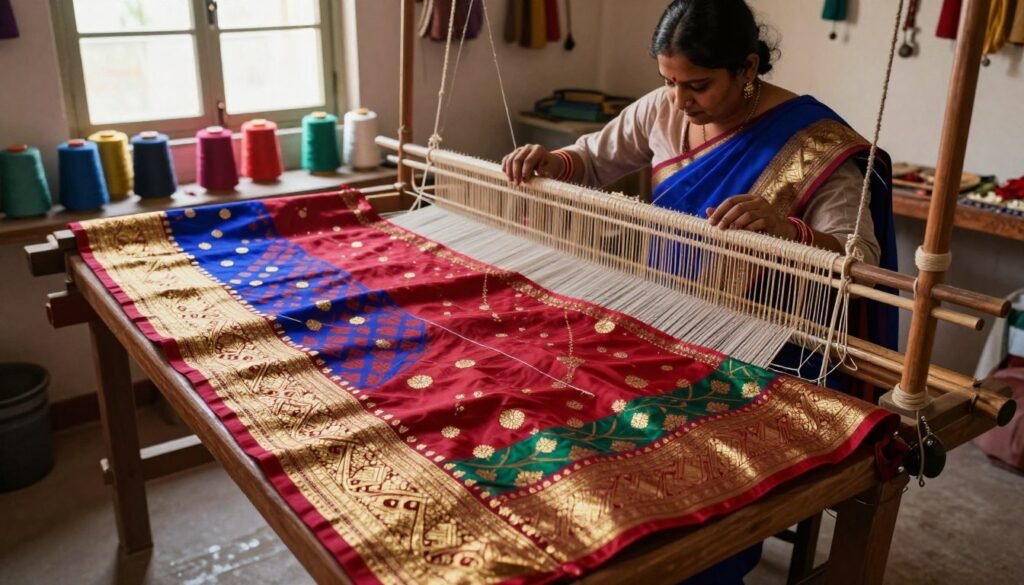
The journey begins with the careful selection and preparation of raw silk. Weavers must clean and degum the silk fibers to ensure they achieve a soft, lustrous finish before dyeing them in vibrant, traditional colors.
Once dyed, the silk is wound onto bobbins with extreme care. This step is essential to prevent tangles and ensure the tension remains consistent throughout the weaving process.
Designing the Pattern with Graphs and Punch Cards
Before a single thread is woven, the design is mapped out on graph paper. This blueprint dictates the placement of every motif, from delicate floral vines to complex geometric borders.
Artisans then translate these designs into a series of punch cards. These cards act as a mechanical guide for the loom, allowing the weaver to lift specific warp threads to create the desired pattern with remarkable accuracy.
Weaving Zari into the Silk Structure
The integration of zari—fine metallic thread—is what gives these garments their signature regal appearance. Weavers carefully interlace the gold or silver threads into the silk base, ensuring the metal sits perfectly atop the fabric.
This process requires a high level of coordination. The weaver must manage both the silk and the metallic threads simultaneously to maintain the structural integrity of the fabric.
Why Handloom Production Requires Patience and Precision
Creating a handwoven banarasi saree is a slow, meditative practice that cannot be rushed. A single piece can take weeks or even months to complete, depending on the complexity of the design.
The weaver’s physical presence is the most critical tool in the workshop. By manually controlling the shuttle and the treadles, the artisan ensures that every motif is placed with unparalleled precision.
Distinguishing Handwoven Work from Powerloom Production
While powerlooms offer speed, they lack the soul and unique character of hand-loomed textiles. We can identify the difference by examining the reverse side of the fabric and the slight variations in the weave.
| Feature | Handwoven Saree | Powerloom Saree |
|---|---|---|
| Production Speed | Very Slow | High Volume |
| Motif Detail | Intricate & Unique | Uniform & Repetitive |
| Reverse Side | Visible Floating Threads | Clean & Uniform |
| Human Touch | High Artisan Control | Automated Precision |
Silk, Zari, and the Materials That Define a Banarasi Saree
We believe that the true soul of a masterpiece is found in the quality of its silk and the brilliance of its metallic threads. Every banarasi saree represents a harmonious blend of natural fibers and skilled craftsmanship. By understanding these core components, we can better appreciate the artistry required to produce such iconic textiles.
The Texture and Drape of Banarasi Silk
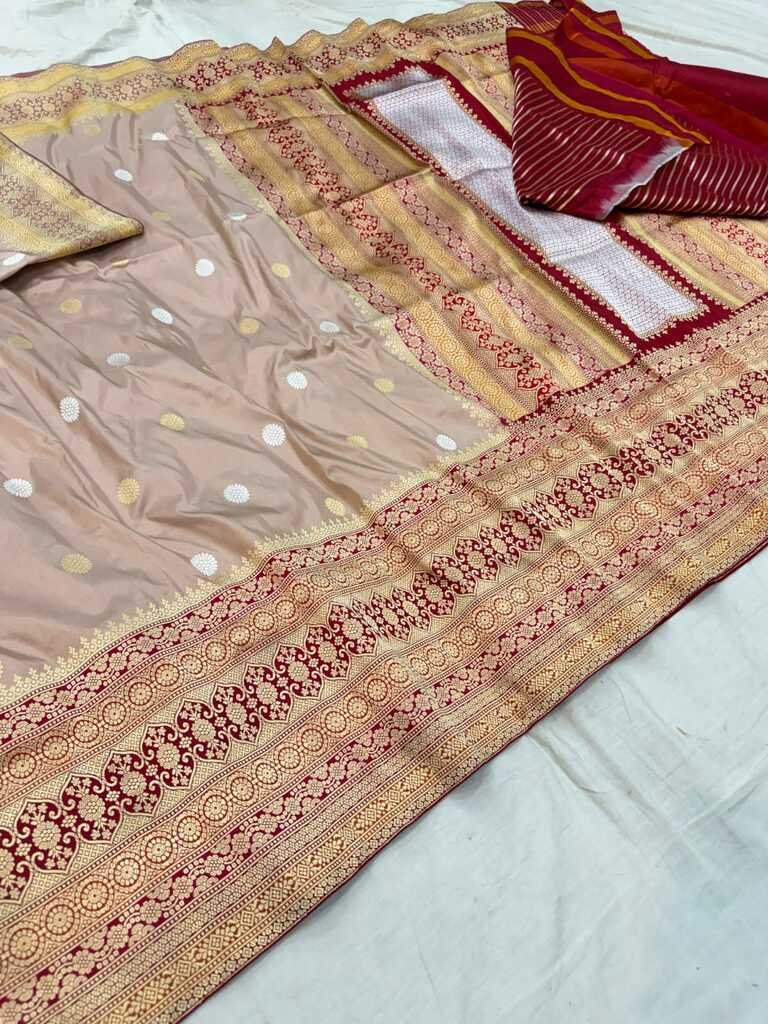
The hallmark of a high-quality banarasi silk saree is its distinctively smooth and lustrous texture. We often look for a fabric that feels substantial yet fluid, allowing it to drape elegantly around the body. This unique weight comes from the high-grade mulberry silk used in the warp and weft.
Gold and Silver Zari: Traditional and Contemporary Choices
Zari is the metallic thread that gives these garments their regal appearance. Traditionally, artisans used pure gold and silver wires wrapped around a silk core to create intricate patterns. Today, we see a shift toward more accessible options:
- Pure Zari: Features real gold or silver, offering unmatched longevity and a soft, muted glow.
- Tested Zari: Uses copper or other base metals with a gold-colored coating, providing a vibrant look at a lower price point.
- Polyester Zari: A modern, lightweight alternative that mimics the appearance of metal without the weight.
Pure Banarasi Saree Materials and Their Quality Indicators
When we search for a pure banarasi saree, we must evaluate the consistency of the weave and the purity of the fibers. Authentic pieces often exhibit a slight irregularity that confirms the human touch. We recommend checking the reverse side of the fabric to ensure the motifs are integrated into the structure rather than printed on top.
| Feature | High-Quality Indicator | Low-Quality Indicator |
|---|---|---|
| Silk Feel | Soft, cool, and dense | Rough, stiff, or synthetic |
| Zari Finish | Consistent, non-tarnishing | Flaky, dull, or uneven |
| Weave Density | Tight, uniform patterns | Loose, visible gaps |
How Fiber, Weave Density, and Finishing Affect Value
The final value of a garment is determined by the density of the weave and the complexity of the finishing process. A higher thread count results in a more durable and refined banarasi silk saree that retains its beauty for generations. We find that meticulous finishing, such as clean edges and perfectly aligned motifs, distinguishes a true heirloom from a mass-produced imitation.
The Motifs and Techniques Behind Traditional Banarasi Sarees
We find that the true beauty of a traditional banarasi saree lies in the delicate interplay of its motifs and structural patterns. These designs serve as a visual language, reflecting centuries of cultural exchange and artistic refinement. By examining these elements, we gain a deeper appreciation for the labor-intensive processes that define this iconic textile.
Floral Butis, Butidars, and Jangla Patterns
The surface of these sarees is often adorned with butis, which are small, repeating floral motifs scattered across the fabric. When these motifs cover the entire field in a dense, uniform arrangement, the pattern is known as butidar. In contrast, the Jangla layout features intricate, interconnected floral vines that sprawl across the saree, creating a lush and opulent appearance.
Kalka, Paisley, and Mughal-Inspired Ornamentation
Many designs draw heavy inspiration from the Mughal era, incorporating stylized floral sprays and geometric borders. The Kalka, or paisley motif, remains a central element, often appearing in the large, dramatic pallu of the garment. These motifs are not merely decorative; they represent a sophisticated blend of Persian aesthetics and local Indian craftsmanship.
Meenakari Colorwork and Multi-Hued Brocade Details
To achieve vibrant, multi-colored effects, weavers employ the Meenakari technique. This process involves adding extra colored silk threads during the weaving stage to highlight specific floral or bird motifs. The result is a traditional banarasi saree that appears to be painted with thread, offering a rich, layered aesthetic that stands out against the base fabric.
Kadhwa, Cutwork, and Tissue Weaving Techniques
The structural integrity of the design often depends on the specific weaving method chosen by the artisan. Kadhwa is a labor-intensive technique where each motif is woven individually, ensuring a clean finish on the reverse side. Alternatively, cutwork involves weaving motifs in a way that allows excess threads to be trimmed, while tissue weaving uses fine metallic threads to create a delicate, translucent, and shimmering surface.
The mastery of the loom is not just in the speed of production, but in the patience required to translate complex patterns into tangible art.
From the Varanasi Loom to Our Wardrobes
Every exquisite banarasi saree we wear represents a long-standing connection between ancient weaving villages and modern fashion. This journey begins in the quiet lanes of Varanasi, where the rhythmic sound of the loom creates art. We find that the path from the loom to our closets is a testament to human dedication and cultural preservation.
How a Banarasi Saree Moves Through the Supply Chain
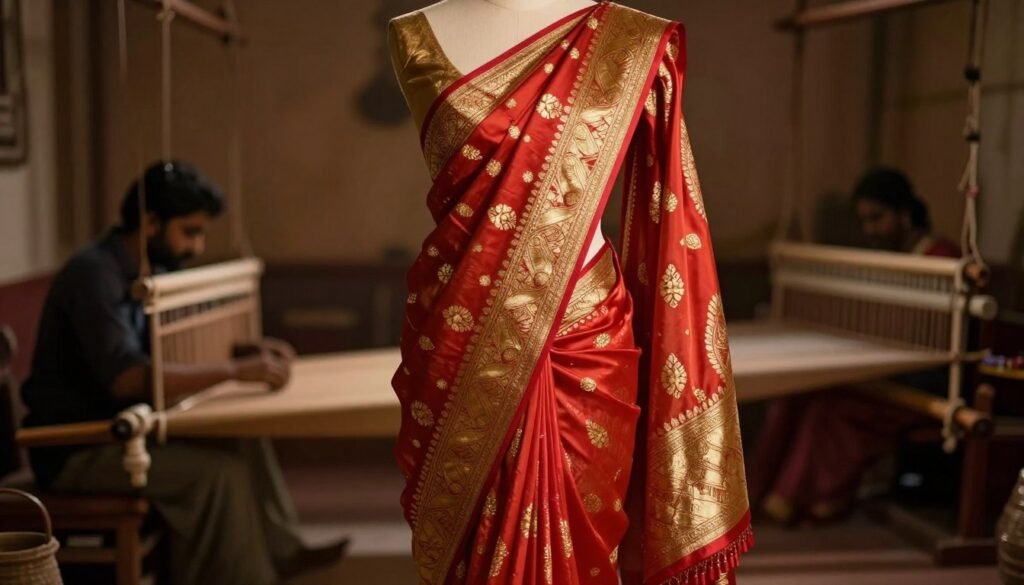
The supply chain for these textiles is deeply rooted in community collaboration. Raw silk is sourced and prepared before it reaches the master weavers who spend weeks crafting a single piece. Once the weaving is complete, the fabric undergoes rigorous quality checks to ensure it meets the high standards expected of such a prestigious garment.
From the workshop, the finished pieces move to local merchants or specialized cooperatives. These entities act as the bridge between the rural artisans and the global market. They ensure that the legacy of the traditional banarasi saree reaches enthusiasts who value authentic craftsmanship.
The Roles of Weavers, Cooperatives, Merchants, and Designers
Each participant in this chain plays a vital role in maintaining the quality of the product. Weavers provide the technical skill, while cooperatives often provide the necessary infrastructure and fair-trade support. Merchants handle the logistics of distribution, and designers bring a fresh perspective to the age-old patterns.
| Role | Primary Responsibility | Impact on Quality |
|---|---|---|
| Weaver | Hand-looming the fabric | High precision and detail |
| Cooperative | Resource management | Ensures ethical production |
| Merchant | Market distribution | Connects artisans to buyers |
| Designer | Pattern innovation | Modernizes aesthetic appeal |
How Traditional Banarasi Sarees Became Bridal and Occasionwear Staples
For generations, these sarees have been synonymous with celebration and status. Their intricate gold and silver zari work makes them the preferred choice for weddings and formal events. We often view these garments as heirlooms, passed down from mothers to daughters as symbols of love and tradition.
The heavy, opulent nature of the fabric lends a sense of grandeur to any occasion. By choosing a traditional banarasi saree, we are not just wearing a dress; we are participating in a cultural ritual that has defined Indian elegance for centuries.
The Rise of Designer Banarasi Sarees in Modern Fashion
In recent years, the designer banarasi saree has gained immense popularity on international runways. Designers are now experimenting with lighter silk blends and contemporary color palettes to suit modern tastes. This evolution allows us to wear heritage pieces in more versatile, everyday settings.
By blending classic motifs with modern silhouettes, the designer banarasi saree remains relevant in a fast-paced fashion world. We see a beautiful harmony between the past and the future, ensuring that this iconic textile continues to thrive in our modern wardrobes.
How We Can Identify an Authentic Banarasi Saree
When we invest in a piece of heritage, we want to be certain that it reflects the true spirit of Varanasi. Distinguishing an authentic banarasi saree from mass-produced alternatives requires us to look beyond the surface. By focusing on specific physical traits, we can better appreciate the labor that goes into every thread.
Reading Silk Quality, Weave Detail, and Reverse-Side Finishing
The first step in our assessment involves examining the texture and the back of the fabric. A handwoven banarasi saree typically features a slightly uneven, organic texture that machine-made silk lacks. We should always inspect the reverse side, where we will often see loose threads or a slightly messy finish that confirms the manual nature of the weaving process.
If the back of the fabric looks perfectly smooth or has a lining, it is likely a machine-made imitation. Genuine silk feels substantial and cool to the touch, offering a drape that is both heavy and elegant. We look for these subtle imperfections as proof of human craftsmanship.
Recognizing Genuine Zari and Consistent Motif Construction
Genuine zari is another hallmark of quality that we must evaluate carefully. Authentic metallic threads are often made with a silk or cotton core wrapped in gold or silver-colored wire. We can test this by checking if the zari has a slightly muted, sophisticated shine rather than a harsh, plastic-like glitter.
Furthermore, we should observe the consistency of the motifs across the entire length of the fabric. In a high-quality piece, the patterns remain uniform and precise. Any sudden breaks or irregularities in the design often suggest that the piece was not crafted with the necessary care.
Understanding Handloom Marks, Silk Labels, and Geographic Indications
While labels provide helpful context, we should view them as part of a larger verification process. The Handloom Mark is a government-backed initiative that helps us identify products made on traditional looms. Similarly, the Geographic Indication (GI) tag serves as a legal assurance that the item originated from the specific region of Varanasi.
We should also look for silk certification labels that verify the purity of the fibers used. While these markers are important, we must remember that they complement our own visual inspection rather than replacing it. Relying on a combination of these indicators gives us the most confidence in our purchase.
Warning Signs of Imitations and Misleading Descriptions
We must remain vigilant against vague product descriptions that fail to specify the weaving technique. If a seller claims a product is a handwoven banarasi saree but offers it at an impossibly low price, we should proceed with caution. Extremely low costs often indicate the use of synthetic fibers or power-loom production.
Other warning signs include inconsistent construction, such as motifs that appear printed rather than woven into the structure. If the seller cannot provide clear information about the materials or the origin of the piece, it is wise to reconsider. Trusting our instincts and verifying the details ensures that we bring home a genuine treasure.
What to Consider Before We Buy a Banarasi Saree Online
Bringing a piece of Varanasi’s weaving history into our homes starts with a smart, informed shopping strategy. When we look to buy a Banarasi saree, the digital marketplace offers endless possibilities, but it also requires a discerning eye to ensure we receive an authentic masterpiece.
Choosing Between a Pure Banarasi Silk Saree and Silk Blends
The foundation of our purchase lies in the material composition. A pure Banarasi saree is crafted from high-quality mulberry silk, offering a natural luster and a soft, luxurious drape that synthetic blends simply cannot replicate.
While silk blends are often more affordable and easier to maintain, they lack the historical significance and longevity of pure silk. We must always check the product description for fiber content to ensure we are paying for the quality we expect.
Comparing Traditional, Contemporary, and Designer Styles
Our personal style dictates the aesthetic we choose. Traditional designs often feature heavy gold zari work and classic motifs like the Jangla or Butidar, which are perfect for weddings and formal ceremonies.
Conversely, a designer Banarasi saree might incorporate modern color palettes or minimalist patterns suitable for contemporary events. We should evaluate whether we want a timeless heirloom piece or a modern interpretation that fits a versatile wardrobe.
Checking Seller Details, Product Photography, and Weaving Claims
Before finalizing our order, we must verify the credibility of the retailer. Reputable sellers provide high-resolution imagery that allows us to inspect the weave density and the reverse side of the fabric for finishing quality.
“Authenticity is not just about the label; it is about the integrity of the weave and the transparency of the artisan’s process.”
We should look for detailed descriptions regarding the loom type. Authentic handloom products often come with specific certifications or geographic indication tags that verify their origin.
Understanding Pricing, Zari Content, and Customization Costs
Pricing is a direct reflection of the labor and materials involved. A banarasi silk saree featuring real gold or silver-coated zari will naturally command a higher price than those using synthetic metallic threads.
| Feature | Pure Silk | Silk Blend |
|---|---|---|
| Luster | Natural/Rich | High/Glossy |
| Durability | High (Heirloom) | Moderate |
| Price Point | Premium | Accessible |
Questions We Should Ask About Origin and Craftsmanship
To ensure we are making a sound investment, we should reach out to the seller with specific inquiries. We recommend asking the following questions:
- Is this piece woven on a handloom or a power loom?
- What is the specific composition of the zari used?
- Can you provide documentation regarding the origin of the silk?
- Are there additional costs for custom blouse stitching or fall-and-picot services?
Shipping, Returns, Duties, and Sizing Considerations for U.S. Buyers
International shipping requires extra attention to detail. We must confirm the seller’s policy on customs duties, as these are often the responsibility of the buyer when importing luxury textiles into the United States.
Furthermore, we should verify the return policy for high-value items. Since a banarasi saree online purchase is a significant investment, knowing that we can return or exchange the product if it does not meet our expectations provides necessary peace of mind.
Styling and Caring for a Banarasi Saree Today
We believe that the true beauty of a handwoven masterpiece shines brightest when it is styled with confidence and cared for with precision. Whether you are attending a grand celebration or a sophisticated evening gathering, your banarasi saree serves as a canvas for personal expression. By balancing heritage techniques with modern sensibilities, we can ensure these textiles remain vibrant for generations.
Pairing a Banarasi Saree with Blouses and Jewelry
The choice of blouse can completely transform the aesthetic of your traditional banarasi saree. For a classic look, we recommend opting for a silk blouse in a contrasting color that complements the zari work. Intricate embroidery or hand-stitched borders on the sleeves add a layer of refinement that honors the craftsmanship of the loom.
When selecting jewelry, consider the weight of the weave. Heavy gold temple jewelry pairs beautifully with dense, ornate patterns, while delicate diamond or polki sets provide a balanced contrast for lighter tissue weaves. Always aim to let the intricate motifs of the fabric remain the focal point of your ensemble.
Adapting Classic Drapes for Weddings and Formal Events
Weddings often call for the traditional Nivi drape, which allows the pallu to showcase the elaborate zari work of the banarasi saree. We find that pinning the pallu neatly over the shoulder provides a structured, regal appearance suitable for formal ceremonies. For added volume, a well-placed pleat at the waist ensures the fabric drapes gracefully as you move.
“True elegance is found in the harmony between the wearer and the weave, where every fold tells a story of ancient artistry.”
Creating a Contemporary Look with Minimal Accessories
Modern styling often favors a “less is more” approach to highlight the quality of the silk. We suggest pairing your traditional banarasi saree with a sleeveless or halter-neck blouse for a chic, urban silhouette. By keeping jewelry minimal—perhaps just a pair of statement earrings—you allow the rich texture of the silk to command attention.
Folding, Storing, Cleaning, and Preserving Silk and Zari
Proper maintenance is vital to protect the delicate fibers and metallic threads of your garment. We recommend the following practices to ensure longevity:
- Storage: Always store your saree in a breathable cotton bag to prevent moisture buildup. Avoid plastic covers, as they can trap humidity and damage the silk.
- Folding: Refold your saree every few months to prevent permanent creases from forming along the same lines.
- Cleaning: Professional dry cleaning is the safest method for a banarasi saree. Avoid harsh chemicals or machine washing, which can fray the zari and weaken the silk structure.
- Preservation: Keep your collection in a cool, dark place away from direct sunlight to prevent color fading over time.
Conclusion
Owning a piece of textile history requires an appreciation for the hands that shaped it. Every banarasi saree serves as a bridge between ancient Varanasi traditions and our modern aesthetic preferences.
We gain more than just a garment when we invest in quality craftsmanship. We support a living heritage that relies on the dedication of skilled artisans. Selecting an authentic banarasi saree ensures that these intricate techniques survive for future generations to admire.
We encourage you to look beyond the surface when shopping for your next heirloom piece. Examine the weave density and the integrity of the zari work to verify the origin of your purchase. A genuine item reflects the patience and precision inherent in the looms of India.
Your choice to value traditional artistry helps sustain the livelihoods of weaving communities. We invite you to wear these masterpieces with pride, knowing you carry a legacy of beauty and technical mastery. Let your wardrobe reflect a commitment to quality and historical preservation.